
Journal
Notes on design, style, and movement,
and how individuality is expressed through everyday life.
What We Carry

There is a quiet moment most of us overlook.
It happens before we leave the house, when we decide what to take with us.
A bag. A pocket. A handful of things.
Often more than we need. Rarely questioned.
We have grown accustomed to carrying more.
More options. More backups. More "just in case."
But choosing less can be its own kind of freedom.
What is truly worth carrying?
Guardisse begins with a simple question:
Not out of habit.
Not out of convenience.
But out of intention.
What we carry is never only physical.
It reflects how we move, what we value, and what we choose to keep close.
There is a certain clarity in carrying only what serves a purpose.
Not excess.
Not noise.
Just what belongs.
This way of carrying is not about restriction.
It is about clarity.
About removing what distracts so what remains can support us—quietly, effortlessly.
The pieces we create follow the same philosophy.
They are not designed to add more.
They are designed to simplify.
To move with you.
To hold what matters without asking for attention.
Because the most meaningful things we carry are often the ones no one sees.
And the most intentional choices are the ones we make without needing to explain them.
If this way of carrying resonates with you, perhaps you are already part of the story.
Why Form Should Respond, Not Dictate
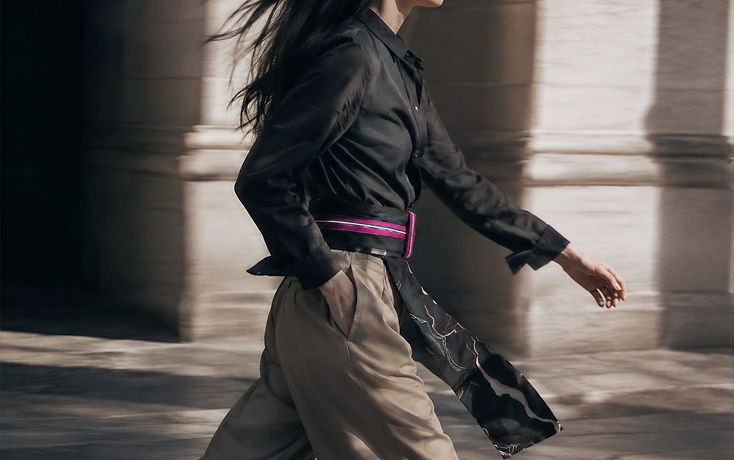
There is a difference between an object that serves us and one that asks us to adapt to it.
The difference is often subtle.
But it changes everything.
Some objects require adjustment.
They dictate where they belong, how they are carried, and how they are used.
Others respond.
They move with us.
At Guardisse, movement is not considered after a design is complete.
It is considered from the beginning.
Before shape.
Before finish.
Before detail.
We ask a simple question:
How should an object live with the person who uses it?
Not how it will appear in a photograph.
Not how it will sit on a shelf.
But how it will move through a real day.
How it feels when reaching for something.
How it adjusts as plans change.
How it responds to motion rather than resisting it.
Good design should create ease.
It should feel natural enough to become part of a routine.
Present, but never intrusive.
Useful, without becoming burdensome.
There when needed.
Quiet when not.
Movement influences more than comfort.
It shapes proportion.
Placement.
Weight.
Balance.
The way an object rests against the body.
The way it feels in the hand.
The way it adapts over time.
This is why we are drawn to objects that allow more than one way of using and living with them.
Objects that adjust.
Objects that transform.
Objects that leave room for choice.
When form begins to dictate behavior, freedom becomes limited.
When form responds, possibilities expand.
The object becomes a companion rather than a constraint.
It supports movement instead of directing it.
We believe design should support movement, not interrupt it.
Respond, not dictate.
Adapt, not control.
Because the best objects are not the ones that ask the most from us.
They are the ones that quietly make room for how we already live.
And in doing so, giving us more freedom to be ourselves.
Why Acccessories

Clothing changes.
Seasons change.
Occasions change.
Even personal style evolves over time.
Yet some objects remain.
They move with us through different years, places, and versions of ourselves.
An accessory does not need to replace a wardrobe.
It does not need to define an identity.
Its role is quieter than that.
It accompanies.
It supports.
It becomes familiar through use.
A simple outfit can be transformed by a single thoughtful addition.
Not because the accessory demands attention.
But because it introduces intention.
A detail.
A texture.
A sense of individuality.
Why do some objects stay with us longer than others?
Perhaps it is because they feel more universal.
They move easily between places, occasions, and stages of life.
They are not tied to a particular season, climate, or moment.
They adapt.
They accompany.
They remain relevant even as other things change.
Accessories often serve more than one purpose.
They add individuality, but they can also provide function.
They accompany movement, create versatility, and adapt to different moments throughout the day.
At Guardisse, this duality matters.
We are drawn to objects that offer both presence and purpose—pieces that contribute something visually while quietly serving a practical role.
The most enduring accessories are rarely decorative alone.
They become useful companions, relied upon not only for how they look, but for how they support daily life.
Accessories also invite exploration.
They are collected over time rather than replaced each season.
A personal collection can draw from different materials, places, and traditions without being confined to a single wardrobe, one season, or one place.
One piece may be discovered while traveling.
Another may be chosen years later.
Together, they become part of a story that is uniquely personal.
This is why we are drawn to accessories rather than garments.
Garments often respond to climate, occasion, and changing needs.
Accessories move more freely between them.
They accompany us to work and travel.
To ordinary days and meaningful moments.
They ask less of us while often offering more.
They do not ask us to become someone else.
They do not dictate.
They respond.
They adapt to the person rather than asking the person to adapt to them.
A well-designed accessory does not compete with the person wearing it.
It creates possibilities.
It allows a familiar outfit to feel different.
It adapts to changing routines.
It remains useful long after novelty fades.
At Guardisse, we do not see accessories as finishing touches.
We see them as companions to everyday life.
Objects that move with us.
Objects that adapt.
Objects that earn their place over time.
Because true longevity is not measured by how long something survives.
It is measured by how long it remains worth keeping close.
Chapters Not Seasons

Many things are created with an expiration date.
A season arrives.
A trend emerges.
Something new replaces what came before.
The cycle begins again.
At Guardisse, we have chosen a different approach.
We think in chapters, not seasons.
A chapter begins with an idea.
Sometimes it begins with a place.
Sometimes with a material.
Sometimes with a craft tradition worth understanding.
Each chapter explores a particular story, allowing it to unfold through design, form, color, and purpose.
Unlike seasons, chapters are not tied to a calendar.
They are not created to be replaced.
They exist for as long as the story feels complete.
And once a chapter closes, it is never repeated.
It becomes part of the journey.
This way of creating encourages intention.
It allows us to focus on meaning rather than volume.
On refinement rather than constant change.
On making fewer things with greater purpose.
Must color, material, or form belong to a season?
We do not believe they have to.
Inspiration can come from a landscape, a craft tradition, a natural element, or a way
of living.
Colors are chosen for what they express and where they come from, not for the month in which they are worn.
Materials are selected for how they feel, function, and endure.
Meaning matters more than seasonality.
A chapter gives space for exploration.
One may be inspired by desert landscapes and heritage handcraft.
Another by elemental forms, natural materials, or ways of living found elsewhere in the world.
Each chapter carries its own perspective while remaining connected to the same philosophy.
For us, craft is not decoration.
Place is not a theme.
Both are sources of understanding.
They help us ask better questions about how something should function, move, and endure.
This approach also changes how a collection is experienced.
Instead of asking what is new this season, we ask:
What story is being explored?
What materials shaped it?
What traditions informed it?
What purpose does it serve?
A chapter is something to discover rather than consume.
To live with rather than replace.
To remember after it has passed.
Because meaningful objects are not defined by when they were released.
They are defined by whether they continue to matter.
That is why we create chapters, not seasons.
What Makes an Object Worth Keeping
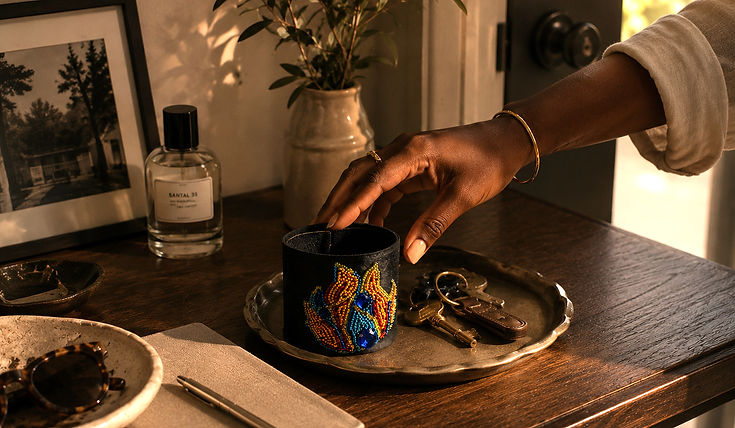
Not everything we own stays with us.
Some things are useful for a moment.
Some satisfy a need.
Others simply pass through our lives.
In the last chapter, we explored why we create chapters instead of seasons.
A chapter asks us to slow down.
To look beyond what is new.
To consider what continues to matter.
The same question applies to the objects we choose to keep.
An object does not become meaningful because it is rare.
Or expensive.
Or difficult to find.
Meaning is built over time.
Through use.
Through familiarity.
Through presence.
Why do some objects remain long after others have been forgotten?
Often, it is because they continue to serve us.
Not only practically.
But personally.
They fit naturally into daily life.
They adapt to changing routines.
They remain relevant even as circumstances change.
The objects we keep closest are rarely the most complicated.
More often, they are the ones that quietly earn their place.
The notebook reached for repeatedly.
The garment worn without hesitation.
The accessory that accompanies countless days without asking for attention.
At Guardisse, we believe usefulness and meaning are not separate ideas.
The strongest objects often hold both.
They serve a purpose.
They support movement.
They contribute visually.
And they continue to justify their presence over time.
This is one reason we value versatility.
An object that adapts has more opportunities to remain useful.
A piece that moves easily between places, occasions, and ways of living is less likely to be set aside.
We also believe restraint matters.
Not every object needs to make a statement.
Not every detail needs to demand attention.
Sometimes longevity comes from balance.
From knowing when enough is enough.
Craft plays a role as well.
Not because craft makes something valuable.
But because thoughtful making often creates objects that age well, function well, and remain enjoyable to use.
Over time, the things we keep become part of our personal landscape.
They collect memories.
They travel with us.
They become familiar in ways that cannot be designed into them from the beginning.
That part is earned.
Perhaps that is what makes an object worth keeping.
Not novelty.
Not ownership.
Not even beauty alone.
But the simple fact that, years later, it still belongs in your life.
The Journal is updated when there is something worth sharing.